Even seasoned grant writers make grant proposal errors, but small changes can be the difference between a funded project and a missed opportunity. Funders review hundreds of applications, and issues such as unclear objectives, vague budgets, or an ineffective statement of need can easily push your proposal to the bottom of the pile.
The good news? Most of these common grant proposal errors are fixable. Let’s explore the five most frequent errors nonprofits encounter—and the exact strategies to correct them for stronger, more competitive submissions.
Error #1: Vague Statement of Need
The Issue
Funders want compelling, urgent evidence of a real problem that aligns with their mission—not vague descriptions. A weak statement of need will cast doubt on your proposal’s relevance and impact. When need statements miss the mark, proposals often linger in the “maybe” pile or get passed over entirely.
Why It Matters
- Funders are risk-averse. They want to invest in solutions for pressing problems.
- Data offers credibility. Concrete figures help reviewers trust that the issue is well-defined and based in research.
- Emotion builds connection. Real stories make statistics relatable, turning numbers into human faces and lived experiences.
How to Fix It
- Use specific, locally relevant data to demonstrate your program is informed and grounded. Instead of: “Many local families struggle.” Try: “According to the county health department, 30% of families in ZIP codes 12345 and 12346 lack reliable childcare options.”.
- Add a short illustrative story or case study to help reviewers align emotionally. Example: “Last year, Maria, a single mother working two jobs, dropped out of our after-school program due to inability to pay. Her story reflects what over 50% of families in our service area face each month.”
- Show alignment with funder goals, presenting a tailored proposal. If a foundation emphasizes family stability, you could write: “This childcare shortage directly undermines family stability—a key priority of the Smith Family Foundation.”
Pro Tip: Add comparative context to underscore urgency. Instead of just saying “30% of families lack reliable childcare,” show how that compares to the national average—e.g., “30% in our region versus 18% nationally.”
By transforming a vague statement into a well-supported, emotionally resonant argument, you elevate your proposal’s credibility and significantly improve its chance of funding. Read our guide to writing a strong statement of need for even more support!

Error #2: Unclear Program Design
The Issue
When your proposal lacks precise planning—meaning undefined activities, vague timelines, or ambiguous outcomes—it leaves funders uncertain about your ability to deliver. This lack of structure weakens your credibility and makes your proposal seem unrealistic or underprepared. That’s often enough to knock your application off the shortlist in a competitive field.
Why It Matters
- Funders must trust your proposal’s feasibility. They want to see that you’ve considered the real-world steps and timeline.
- Clarity improves evaluation: Measurable activities and outcomes make assessing your progress and impact easier.
- Alignment builds confidence: A program that logically follows your need statement feels stronger and more convincing.
How to Fix It
- Outline clear activities and timeline phases: Break your project into steps—planning, implementation, evaluation—and place milestones along a timeline.
- Define SMART outcomes: Swap broad objectives for measurable goals like, “Train 25 youth by Q4, with 80% finding employment within six months.”
- Include a logic model or visual plan: Use a flowchart or diagram to show how your inputs become outputs, leading to desired outcomes.
- Connect everything back to the need: Double-check that each activity directly addresses the problem you’ve identified—if it doesn’t, it probably doesn’t belong.
Pro Tip: Use one visual page to map your timeline and outcomes—reviewers appreciate clarity, and it makes your proposal feel solid and well-structured.
If you need evenmore support with effective program design, check out our guide here.
Error #3: Budget Doesn’t Add Up
The Issue
Your budget tells funders whether your plan is realistic and whether you can be trusted with their money. Reviewers may question your capacity and credibility if it doesn’t match your narrative, includes unexplained costs, or feels inflated or incomplete. Even a small error in math or formatting can raise red flags.
Why It Matters
- Funders require transparency and accuracy: A thorough budget demonstrates planning, accountability, and attention to detail.
- Inconsistencies weaken trust: If your budget says one thing and your narrative says another, it raises concerns.
- Realistic costs show you understand scale: The numbers must align with your scope of work and anticipated outcomes.
How to Fix It
- Double-check alignment: Make sure your budget reflects the scale of services described in your narrative—no more, no less.
- Provide clear justifications: Briefly explain each line item (e.g., “$3,000 for evaluation consultant at 30 hours @$100/hr”).
- Ensure accuracy and completeness: Check all math, totals, and formatting. If allowed, include both direct and indirect costs.
- Tie each cost to a purpose: Funders should be able to see how each expense contributes to your goals.
Pro Tip: Use a separate budget narrative page to explain your numbers. This is where you build trust and show that you’ve thought through every dollar.

Error #4: Ignoring Funder Priorities
The Issue
Even the best-written grant proposals won’t succeed if they don’t align with a funder’s values, focus areas, or strategic goals. Submitting a proposal that’s off-mission, vague in alignment, or generic in tone tells funders you haven’t done your homework.
Why It Matters
- Funder alignment is a top decision factor: Reviewers want to fund projects that advance their mission.
- Mismatched proposals waste time: Submitting off-target applications uses up valuable staff capacity.
- Using the wrong tone or language is a red flag: Funders may skip proposals that feel disconnected from their priorities.
How to Fix It
- Do your research: Read the funder’s website, recent grantee lists, and 990 reports to understand what they truly care about.
- Mirror their language: Use keywords and phrases that appear in their guidelines (e.g., “community-driven” or “economic mobility”).
- Draw explicit connections: In your proposal, show precisely how your work advances the funder’s goals, and be specific.
- Be selective: Don’t apply for every opportunity. Focus only on grants that are a strong fit for your mission and capacity.
Pro Tip: Create a funder “alignment snapshot” for each opportunity—a short paragraph summarizing why your project is a match. Use this snapshot to guide your narrative tone and focus.
Error #5: Rushing the Writing Process
The Issue
Crunch-time proposals often feel forced, incomplete, or choppy. When you write under a deadline with little time for revisions, your narrative, data, and budget miss polish, and reviewers notice. A rushed process increases the risk of errors, reduces clarity, and weakens your competitive edge.
Why It Matters
- Quality suffers under time pressure: Reviewers reject applications that feel hastily assembled.
- Team burnout is real: Scrambling at the last minute affects morale and productivity.
- Missed details can derail your proposal: Important components—like letters of support or compliance documents—can be overlooked or improperly formatted.
How to Fix It
- Start early: Begin your process at least 4–6 weeks before the deadline, and block writing time on your calendar. If you’ve got an upcoming deadline but inspiration is eluding you, we’ve got you covered. Check out our guide to overcoming grant writer’s block!
- Break it down: Divide tasks into phases—research, drafting, internal feedback, final touches—with built-in buffers.
- Use a collaborative board: Tools like Google, Trello, or Notion help you assign tasks, track progress, and avoid last-minute panic.
- Schedule peer review and proofreading: Build in at least two rounds of review—one for content and another for technical accuracy.
Pro Tip: Set a “freeze” deadline 48 hours before submission to prevent new edits. Use that time for final polish, proofreading, and sanity checks, and then hit submit confidently.

Final Takeaway: Small Fixes, Big Results
Even experienced grant professionals can fall into these common traps, but the good news is that each one is fixable. By clarifying your need statement, tightening your program design, aligning your budget and narrative, showing deep alignment with funder goals, and giving yourself enough time to write and revise, you drastically increase your chances of funding success.
Strong proposals don’t happen accidentally—they’re built through intentional strategy, thoughtful planning, and continuous learning.
Next Step: Revisit one of your recent proposals and run it through this checklist. Where can you make improvements before your next submission?
Want more support, templates, and training to help you avoid these errors from the start?
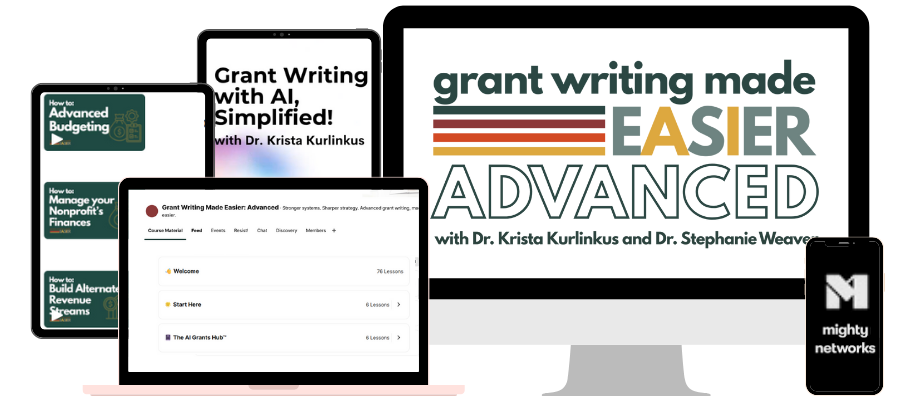
Explore Grant Writing Made Easier Foundations and Grant Writing Made Easier Advanced—our course and community for nonprofit professionals who are ready to write smarter, not harder.
💬 Join the Conversation:
What grant writing mistake have you learned from, or one you nearly made? Share your experience with fellow grant writers in the Grant Writing Made Easier community. Your insights might help someone else avoid the same pitfall!