

People often assume grant writing is “just writing.” That makes sense, because the deliverable everyone sees is the proposal narrative. But the grant writers who consistently get results are doing a lot of work that never shows up in the final PDF: research, planning, strategy, and learning from rejection.
In other words, the writing is the last mile. If you want to become a grant writer, you will get better faster by building the skills that happen before the draft: choosing the right opportunities, gathering proof, and running a clean process.
Why this matters now
Funding is competitive, and “close enough” is less likely to get over the line than it used to. Reviewers are often scanning for clarity, feasibility, and credibility, and they are making fast judgments about whether the plan makes sense.
Even outside of research grants, many funders evaluate similar essentials: Is the need real and well-defined? Is the plan coherent and doable in the timeline? Do the outcomes match the activities? If you can make those answers easy to find, you dramatically increase your odds.
What people mean when they say “grant writing”
When someone says “I want to become a grant writer,” they usually picture the moment you sit down and draft the proposal. In real life, the proposal is the last mile, and the hard part is everything that comes before it: deciding what to apply for, gathering inputs, and shaping a credible story.
A simple way to think about it is this: the strongest proposals read like a calm, organized project plan with a persuasive through-line. The weakest proposals read like a scramble of facts and good intentions.
Skill 1: Writing (translation + argument)
Grant writing is persuasive writing, but not in a hype-y way. It is persuasion through clarity: you are translating a complex program into a simple argument a reviewer can follow quickly. That argument usually has to connect four things in a straight line: a real problem, a specific solution, a reasonable plan, and believable results.
If you have ever read federal review criteria (NIH is a good example), you will notice that reviewers are asked to judge things like importance/significance and rigor/feasibility. The implication is simple: your writing has to help the reviewer see both why the work matters and how the work will be executed.
Quick win: Do the three-sentence translation exercise.
Take any program description and rewrite it in three sentences:
- What problem is being solved.
- What will be done.
- What will change (outcomes).
Then go one step further: add one sentence that answers “Why now?” and one sentence that answers “Why you?” Those two sentences are where beginners usually get vague, and where strong proposals get specific.
Example (before → after)
Before: “We provide wraparound support to families experiencing housing insecurity.”
After: “Families in our county are entering shelters at higher rates, and many are cycling back within six months. We will provide short-term rental assistance plus case management to stabilize housing for 60 families. Within 6 months, at least 85% will remain housed and report improved financial stability. We can do this now because we already have referral agreements with the shelter and a staffed case management team.”
Skill 2: Research (funder fit + pattern recognition)

Strong grant writers do not start with the application. They start by asking, “Is this a real fit, or am I about to waste 12 hours?” Research is how you stop writing to funders who do not actually fund what you do, even if their website language sounds like it.
Most people treat grant research like a scavenger hunt for deadlines. Better grant writers treat it like pattern recognition: What do they fund repeatedly? What do they avoid? What sizes do they give most often? What geographies show up in real award lists?
External research move you can use for foundations: look at IRS filings. Private foundations file Form 990-PF, and those filings typically include a grants list that can tell you who they funded, how much, and sometimes the purpose of the grant. This is one of the fastest ways to reality-check whether a foundation’s “priority areas” match what they actually support.
Try this (15-minute funder-fit audit)
- Read the guidelines once to identify who is eligible and what is out of scope.
- Review recent awards (or 990-PF grant lists) to identify typical grant sizes and recurring grantee types.
- Write one sentence that starts with: “This funder funds _ for _ in .” If you cannot write that sentence clearly, you do not have enough information to draft.
Example: If the award list is 20% awards to statewide arts and culture organizations (and no other arts and culture orgs awards are made) and you are local museum, that is not “a stretch.” It is a no.
Skill 3: Project management (systems beat heroics)
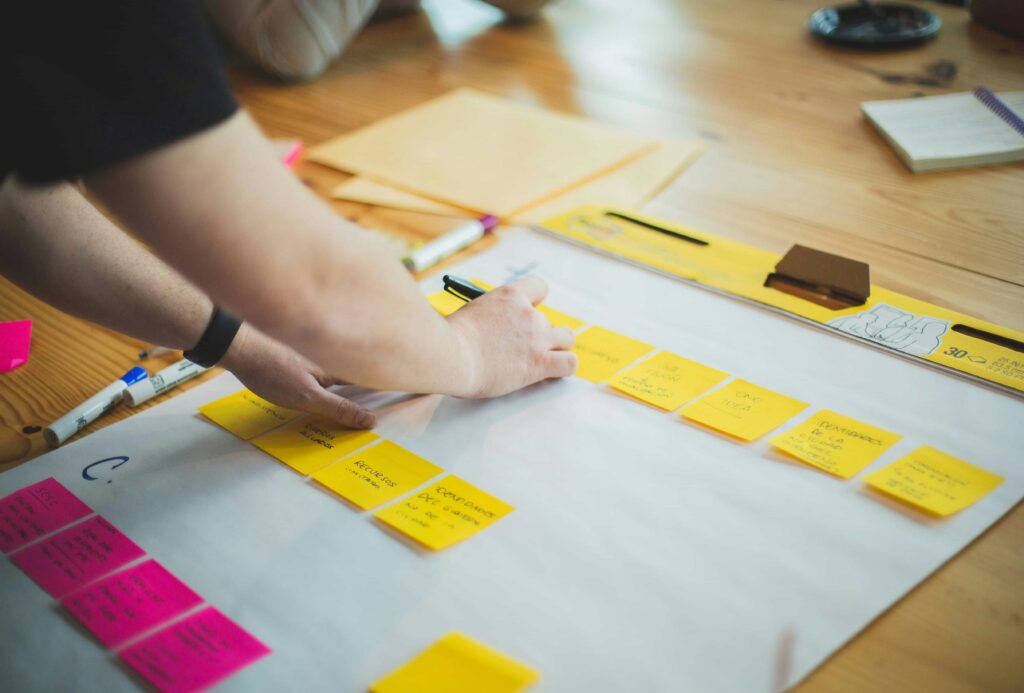
Grant writing is a coordination job. Even if you are the only “grant writer,” you are still managing inputs from programs, leadership, finance, and partners, plus the moving parts funders often require: budgets, letters, attachments, and approvals.
This is why the best grant writers do not feel “fast.” They feel organized. They are not necessarily better writers; they are better at getting the right information on time, keeping stakeholders aligned, and avoiding last-minute chaos.
Quick win: build a proposal checklist with deadlines and owners.
Include:
- Owner for each piece (you, program lead, finance, partner)
- The real due date (with a buffer)
- Attachments needed (letters, audit, 501(c)(3), logic model, etc.)
- Approval steps (who signs off, and by when)
Example: If a letter of support is required, do not put “Request letter” on your checklist. Put “Send draft letter to partner” and “Get signed PDF back” as separate items with separate deadlines. Those are two different risks.
Skill 4: Strategy (framing + proof)

Strategy is the bridge between what you do and what the funder wants to fund. It is the skill of choosing the right frame and the right proof, so the reviewer can see alignment without doing extra work.
The fastest way to improve your strategic thinking is to separate outcomes from outputs. Outputs are what you deliver (classes held, clients served, sessions offered). Outcomes are what changes because of those outputs (skills gained, behavior change, improved stability, reduced risk). Many funders are increasingly explicit that they want measurable outcomes and a plan to track them, not just a list of activities.
Two strategic questions to practice
- What does this funder reward (and what do they ignore)?
- What proof would make a skeptical reviewer believe your outcomes are realistic?
Example: If a funder is focused on workforce pathways, your afterschool program should not lead with “enrichment.” Lead with readiness: attendance, persistence, credential progress, measurable skills, and what will be tracked. You are not changing the program; you are changing the frame so the reviewer can see why it fits.
Skill 5: Resilience (rejection is normal, iteration is a skill)

Most proposals get rejected. That is not a personal failure, and it is not always a writing problem. It is often a fit problem, a capacity problem, a timing problem, or a “we ran out of money” problem.
Resilience is the skill of learning without spiraling. Strong grant writers treat each submission as a data point they can use to improve the next cycle, even when the answer is no.
Try this: a five-minute rejection (or submission) debrief.
- What was hard (and why)?
- What do we need earlier next time (data, stories, partner commitments)?
- What is reusable (language, budget notes, outcomes, boilerplate)?
Over time, this is how you build a template library and a repeatable process, which is what makes grant writing feel easier.
Common mistakes
- Starting with a draft before confirming funder fit, eligibility, and typical award size.
- Overexplaining background instead of making a clear argument and a clear plan.
- Treating timelines, budgets, and attachments as an afterthought (they are often where proposals fail).
- Listing outputs when the funder is asking for outcomes and a plan to measure them.
- Taking rejection personally and changing everything instead of improving one piece at a time.
Quick action steps
- Rewrite one program in three sentences, then add “Why now?” and “Why us?”
- Create a one-page funder-fit checklist that includes eligibility, average award size, geography, and recurring grantee types.
- Build a proposal timeline with owners, due dates, and buffers (and treat letters as a two-step process).
- Make a “proof list” for each outcome (baseline data, evaluation plan, partner proof, prior results).
- After your next submission, do a five-minute debrief and save reusable pieces.
Your Next Step
Download 5 Things You Need to Know Before You Apply for Grants.
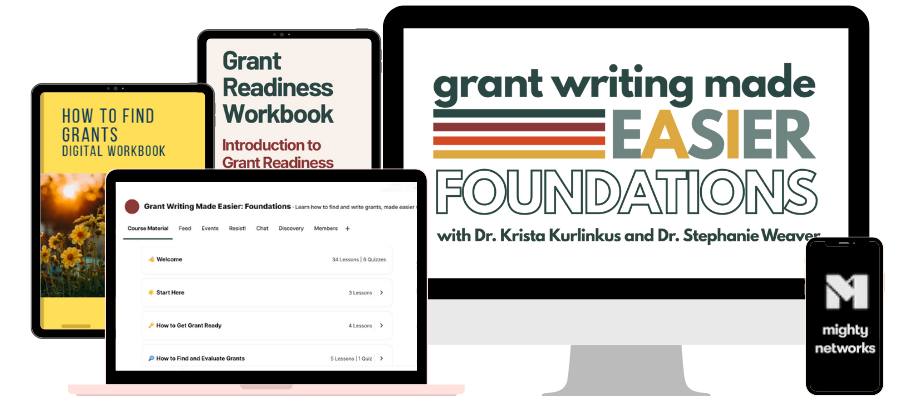
Then, if you want step-by-step structure for building these skills (writing, research, and strategy), joining Grant Writing Made Easier: Foundations is the best next step.




Leave a Comment