Struggling to keep up with grant writing as a team of one, or as part of a small nonprofit where everyone wears multiple hats? You’re not alone. Across the nonprofit sector, countless small nonprofits and grassroots organizations do life-changing work with limited staff, tight budgets, and never enough daily hours. That can overwhelm grant writing for small nonprofits, but it doesn’t have to.
With a clear strategy and a few innovative systems, even the smallest teams can write competitive, compelling grant proposals. Here’s how to maximize your impact when capacity is limited.
1. Focus Your Efforts as a Small Nonprofit: Apply Where You’ll Have the Most Impact
When your organization is stretched thin, it’s easy to fall into the trap of chasing every grant that crosses your inbox. After all, every dollar counts, right?
But applying for every opportunity is a fast track to burnout, not funding. It spreads your limited time and resources too thin, often resulting in rushed, unfocused proposals that don’t stand out. The most successful small organizations aren’t writing more grants—they’re writing better ones by being selective and strategic.
With the difficulties of the current funding landscape, it’s more important than ever to be super strategic about who you approach for funding. This is even more imperative when grant writing for small nonprofits. Here’s how to refine your focus:
- Target funders whose mission and values align with yours. Look for grantmakers that support your specific population, cause, or geographic area. A strong mission match increases your chances of getting funded and helps build a foundation for long-term support.
- Prioritize opportunities that are truly within reach. Some grant applications require extensive attachments, audits, or years of financial history. These may be unrealistic if you’re a small or new nonprofit. Instead, seek out funders who explicitly welcome first-time applicants, smaller budgets, or grassroots initiatives.
- Start local. Community foundations, city or county programs, and regional funders often have a better understanding of your context and fewer applicants competing for funds. Winning a few smaller, local grants can also strengthen your credibility for larger, national opportunities later on.
- Assess opportunity cost. Every grant you choose to apply for should be worth the effort. Ask yourself: Is this funder likely to support our type of work? Are the requirements reasonable for our current capacity? Could the time spent here be better used elsewhere?

Pro Tip: Keep a living grant strategy document or tracker that lists deadlines and includes notes on alignment, ease of application, and past results. Over time, this will help you make faster, smarter decisions about which opportunities are truly worth pursuing.
2. Build a Reusable Grant Template Library for Grant Writing
Writing every grant proposal from scratch? That’s not just exhausting—it’s unsustainable, especially when it comes to grant writing for small nonprofits.
Building a centralized grant template library is one of the most effective ways to save time and increase consistency. Think of it as your internal toolbox: a set of ready-to-go content blocks you can customize and reuse across multiple applications.
This reduces prep time and helps you maintain a consistent voice and narrative across all your proposals.
Here’s what your library should include:
- Organizational Overview & Mission Statement: A compelling but concise description of who you are, who you serve, and why your mission matters. Tailor it for different audiences—foundations, government funders, or corporate giving programs.
- Program Descriptions: Create one-pagers or summaries for your core programs or services. Include goals, activities, target populations, and intended outcomes.
- Statements of Need: These sections explain why your work is necessary, backed by local and national data, community input, and personal stories. Keep updated statistics and sources so you’re not scrambling at the last minute.
- Budget Justifications & Templates: Most grants require breaking down your numbers. Prepare clear, pre-formatted explanations for everyday expenses like staff time, supplies, and indirect costs.
- Evaluation & Outcomes Plans: Many funders want to know how you’ll measure success. Draft a few flexible evaluation strategies to adapt to different grant formats, including quantitative metrics and qualitative feedback.
- Sustainability Language: Be ready to explain how your program will continue after the grant ends. This might include partnerships, additional funding streams, or community support.
- Success Stories & Impact Data: Short narratives, testimonials, or case studies—strategically paired with recent outcomes or performance metrics—can add depth and credibility to your proposal. Need help sharpening your storytelling skills? We’ve got you covered here.
Pro Tip: Store your grant library in a shared workspace your team already uses—like Google Drive, Notion, or Dropbox. Organize it with clear folder names and version control; nothing gets lost or duplicated.
Building this system takes a little time upfront, but once in place, it becomes a robust foundation that saves you hours (and stress) every time you write. This is one of the best ways to be most effective and efficient regarding grant writing for small nonprofits.
3. Don’t Go It Alone: Tap Into Your Small Nonprofit Team’s Strengths
Grant writing for small nonprofits may seem like a solo task, but it doesn’t have to be. In fact, the most effective proposals are rarely the work of just one person. They reflect the insights, data, and voices of an entire organization.
Even if you’re the only one officially tasked with grant writing, you don’t have to do everything yourself. Small teams can still collaborate if roles are clearly defined and tasks are shared innovatively and strategically.
Here’s how to make collaboration work, even with limited staff:
- Ask for help gathering data and metrics. Program staff often have firsthand access to the numbers that show your impact—participant counts, service outcomes, improvement rates, etc. Set up a recurring process to collect this data ahead of deadlines.
- Pull in testimonials and stories. The people you serve are often your best storytellers. Invite staff, volunteers, or board members to collect short quotes, case studies, or anecdotes that illustrate your work in action.
- Get a second pair of eyes on every draft. A quick proofread from someone outside your development team can catch typos, confusing language, or unclear sections. Reviewers don’t need to be grant experts—just fresh readers who can provide honest feedback.
- Ask for alignment checks. Sometimes the biggest challenge in grant writing is ensuring the proposal stays consistent with your organization’s messaging, priorities, and strategic plan. A quick review from leadership or program staff can ensure you’re telling the right story.
- Break the process into bite-sized pieces. Not everyone has time to read a full grant proposal. Still, they can often take on a specific piece, like reviewing a logic model, writing a program summary, or proofreading a budget narrative.
Pro Tip: Maintain a “living” list of “grant helpers”. These would be people in your organization who can jump in when needed. Include their strengths (data gathering, proofreading, storytelling, etc.) and availability. Having this list ready means you won’t be scrambling at the last minute.
By creating a culture of shared ownership around grants, you will reduce your stress and create more accurate, compelling proposals that reflect the full depth of your organization’s work.
4. Use Simple Tools to Save Time with Grant Writing for Small Nonprofits
You don’t need an expensive grant management platform to stay organized. Grant writing for small nonprofits can be streamlined with free or low-cost tools that are easy to adopt and quick to implement.
The goal isn’t to build a complex system—it’s to save time and reduce stress. Here are a few essential tools that can help streamline your process of grant writing for small nonprofits without stretching your budget:
- Google Docs & Drive: Perfect for drafting proposals collaboratively, storing templates, and sharing documents with team members or reviewers in real time.
- Trello or Notion: Visual task boards and calendars can help you track deadlines, application statuses, and document needs in one place. Bonus: They’re also great for managing workflows beyond grants.
- Instrumentl, GrantStation, or Grants.gov: Use these tools to stay on top of new funding opportunities. Some offer filters to match your focus area or budget size.
- AI Writing Tools (like ChatGPT): AI writing tools can be surprisingly helpful for brainstorming language, rewording dense content, or polishing rough drafts—especially when working under a tight deadline.
Pro tip: Keep it simple. Choose the tools your team will actually use, and build your process around them. Technology should lighten your workload, not complicate it.

5. Build Relationships With Funders—Before You Need Funding
Excellent writing is essential, but relationships matter just as much in the grants world, sometimes more. Behind every foundation or funding organization is a person (or team of people) who wants to support impactful work. The key is to show them that your organization is more than just another application.
Taking time to build authentic, professional connections with funders can lead to invaluable insights, long-term partnerships, and, yes, more successful proposals. And the good news? Relationship-building doesn’t require a big budget—just intentionality and consistency.
Here are a few low-effort, high-impact ways to start building relationships to support grant writing for small nonprofits:
- Engage on social media or LinkedIn. Many funders now share updates, application tips, and grantee spotlights online. Follow them, like or comment thoughtfully, and understand their voice and values.
- Send an introduction email before you apply. A short, respectful note expressing your interest can help put your organization on the radar. You might even get helpful guidance on what they’re really looking for.
- Attend funder webinars, office hours, or regional briefings. These are great opportunities to hear directly from decision-makers, ask clarifying questions, and make a personal impression—even in a virtual setting.
- Follow up with gratitude. Whether you win the grant or not, always send a thank-you note after being notified of the funding decision. Funders remember applicants who show professionalism and respect for the process.
Funders often fund people, not just proposals. When you demonstrate that you’re invested in the relationship, not just the money, you stand out in the best possible way.
Learn More: Our Signature Grant Writing Made Easier Course
Feeling stretched thin but still expected to deliver strong grant proposals? You don’t have to figure it all out on your own.
We created our Grant Writing Made Easier course specifically for small nonprofit organizations, solo development staff, and scrappy teams that want to work smarter, not harder. Whether you’re just starting or looking to improve your process, this course gives you the structure and support you need to succeed.
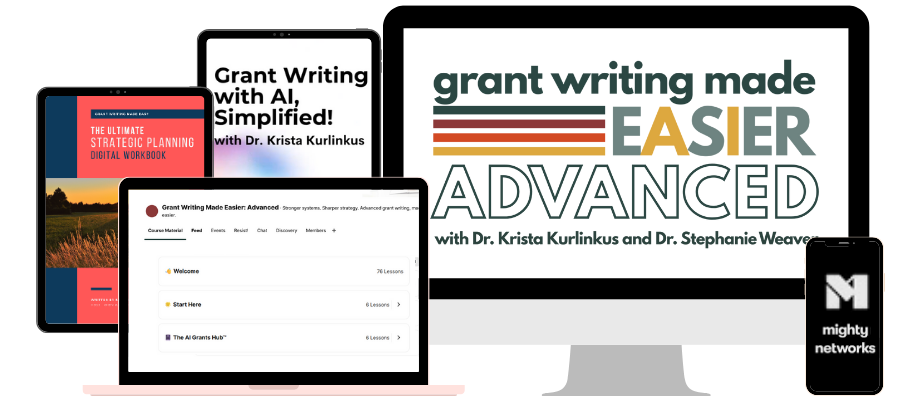
Inside the course, you’ll get:
- Plug-and-play templates for proposals, budgets, and cover letters
- A complete grant calendar system to track deadlines and stay organized
- Easy-to-follow guides for crafting data-driven narratives, building funder relationships, and more
- Real-world examples and bonus resources designed to save you time and reduce stress
Everything is built with small teams in mind—no fluff, no filler, just tools that actually work.
Click here to learn more about the course and get started.
Join the Conversation
What’s one strategy you use to save time and stay sane while writing grants with a small team? Drop your thoughts below—we’d love to hear from you!